Register at university
Register through the university process so your name is included in the training and placement list.

Start with a simple placement contest, join the right track, then train through guided practice, mentoring, assignments, and ECPC-style contests.
The contest is only used to understand each student’s current level and place them in the right training group. Students are not removed because of this contest. It helps coaches choose the suitable level and customize the training group inside the Freshmen or Higher Levels track.
Three simple steps. No guessing, no confusing selection process.
Register through the university process so your name is included in the training and placement list.
Solve what you can. The goal is to understand your current level, not to eliminate students.
Coaches use the contest result to place you in the group that matches your current ability.
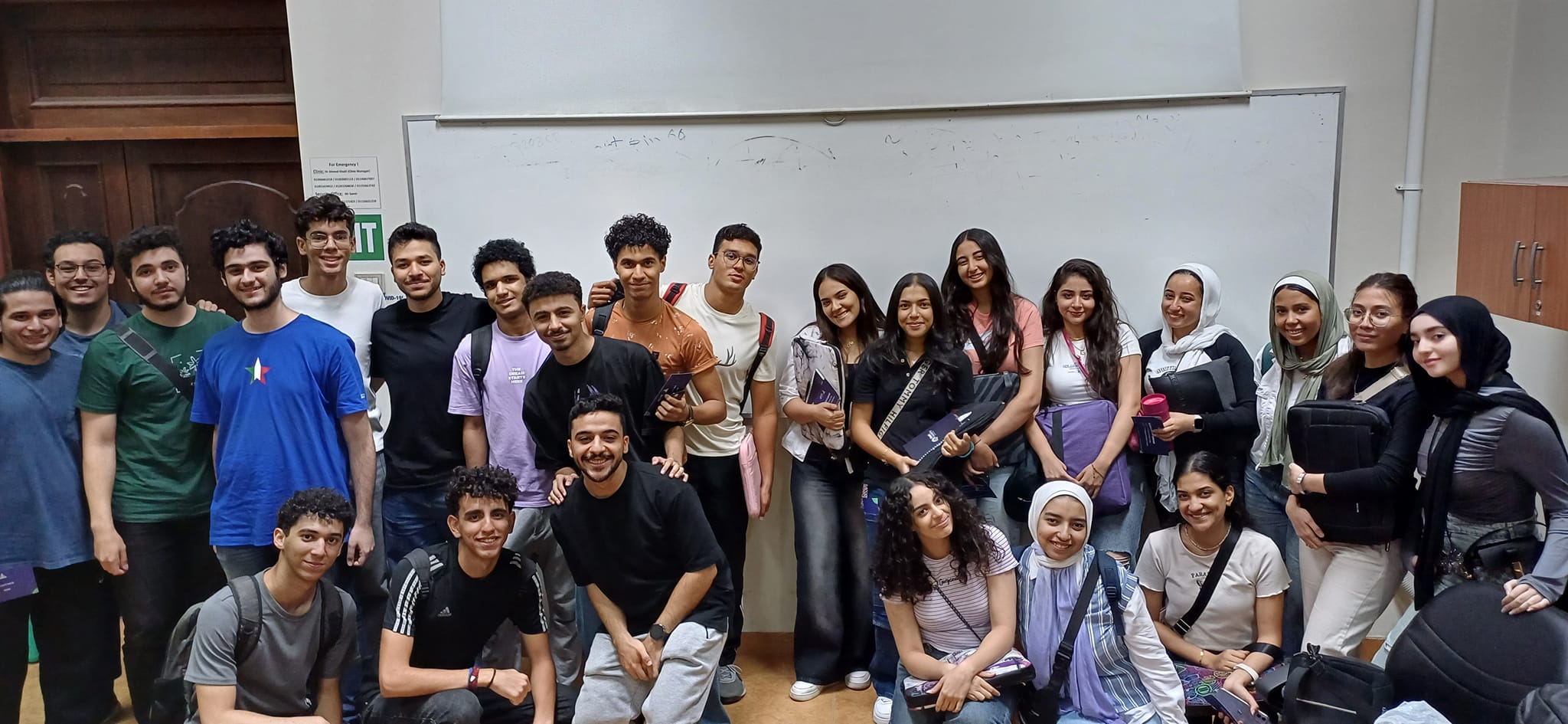
The training is designed for real student groups: placement, guided sessions, hands-on practice, assignments, and contest-style preparation inside the university environment.
The program starts from the student’s current level and gradually moves toward stronger topics, practice contests, and team-based preparation.
For students preparing for ECPC, university programming contests, algorithms, and stronger coding skills.
Lectures, mentoring, practice sessions, assignments, and contest-style problem solving.
Students learn to think faster, debug better, and handle contest pressure with more structure.
The training duration depends on the student’s university year.
Designed for Freshmen students with focused problem-solving foundations, guided practice, and contest preparation.
Designed for Higher Levels students with deeper practice, more topics, assignments, mentoring, and contest-style training.
The training contains enough topics, levels, and practice content to support different student backgrounds. The 2 July contest helps coaches choose the best starting point for each student.
Good for students who know programming basics but need stronger problem-solving habits.
Good for students who can solve medium problems and want more algorithms and strategy.
Good for strong students who already train seriously and need harder practice, strategy, and team preparation.
For students who are new to problem solving or need stronger programming foundations.
Programming basics, implementation, arrays, functions, simple math, and beginner problem-solving habits.
For students who already solved problems before and need more structure, speed, and techniques.
Sorting, searching, recursion, standard libraries, common data structures, and medium problem practice.
For strong contestants who already train seriously and need advanced contest preparation.
Graphs, dynamic programming, optimization, advanced data structures, team strategy, and hard contests.
Each component supports consistent practice, feedback, and measurable progress.
Main concepts, techniques, and examples for each topic.
Coach guidance on thinking, debugging, approaches, and training habits.
Problem solving, submissions, feedback, speed, and accuracy improvement.
Weekly tasks to build consistency and track understanding.
Timed ECPC-style practice to prepare for real competition pressure.
Skills and habits that continue after the training ends.
The training uses familiar platforms for practice, communication, and shared materials.
Progress is measured through practice and participation, not only one result.
Encourage regular practice and help coaches track understanding.
Measure commitment and help students benefit from lectures and mentoring.
Helps students adapt to time pressure, ranking, and submission behavior.
Shows whether the student is ready to move up or needs more practice.
Quick answers for the questions students usually ask before joining.
No. The contest is for placement only. It helps coaches put you in a group where the training will actually help you.
Freshmen students take the 30-hour track. Higher Levels students take the 60-hour track.
Yes. Beginners can start in the Beginner Path if they are ready to practice consistently and improve step by step.
No. It helps any student who wants stronger coding, algorithms, and problem-solving skills. ECPC preparation is one important path.
